


Robert Fitz Walter, Robert de Hastings (ca. 1075 – ca. 1129), was associated with…
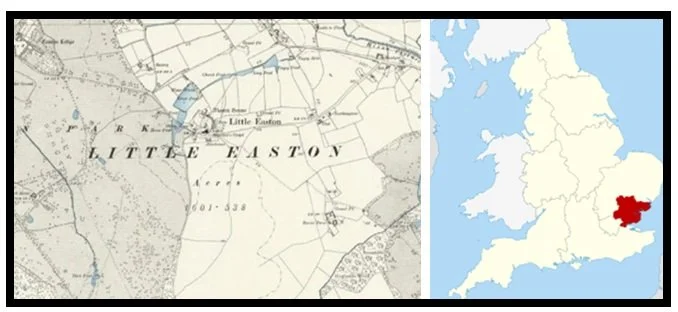
…Little Easton in Essex. At the time of the Domesday book, it was known as Estaines Parva…
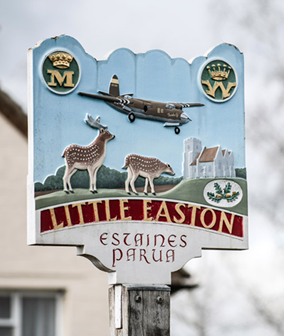
…and still is. The town boasts…
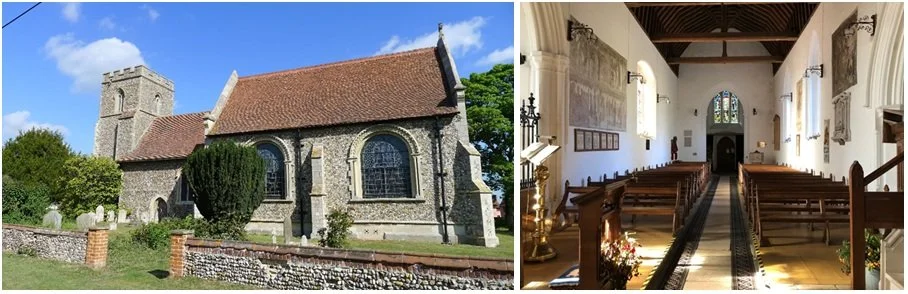
…the Church of St. Mary the Virgin…
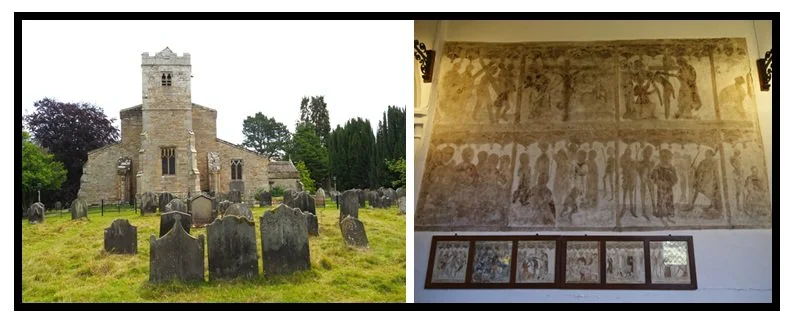
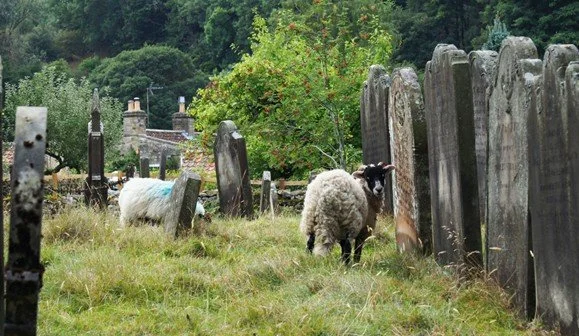
A beautiful, historic church, but I’m not so sure that this…
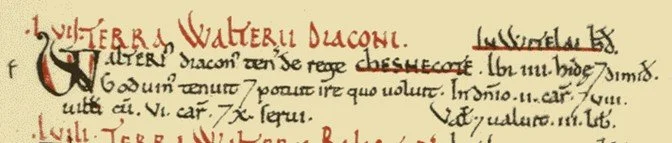
…is a good idea. The Hastings family of the Barony of Little Easton, also known as the Barony of Robert de Hastings, has a considerable amount of written works associated with it. I take the position that Robert’s father was Walter the Deacon, and not Walter Fitz Other, seeing that the Barony of Little Easton was carved out of land owned by Walter the Deacon. Robert was known as Robert Fitz Walter, so there is room for confusion. But it seems that Robert may also have been known as Robert de Windsor. This is where a lot of confusion lies. Some have taken the reading based on a document from King Henry I written in 1128…Robert Fitz Walter of Windsor…and apply the word Windsor to Walter, and not to Robert. The family’s connection to Windsor is puzzling, though one suggestion has been that Walter’s family owed military duties to the family ruling at Windsor. All that is known from Henry I was that William de Hastings had been granted the estate of his father Robert Fitz Walter de Windsor. Walter the Deacon may have been Norman, though this isn’t certain. His name as it appears in the Domesday…
One source maintains that Robert de Windsor must have been the son of Walter Fitz Other, who held the castle in Windsor on behalf of the king. He apparently didn’t use the de Windsor title. One is tempted to see here a conflation, whereby reference is made to Robert, son of Walter of Windsor, as an error, whereby Walter the Deacon was confused with Walter Fitz Other of Windsor, i.e. the two men named Walter were confused in the source material. Walter was the first Baron of Eton. Upon his death, his son, William de Windsor, became second Baron of Eton. His second son was Robert FitzWalter, i.e. representing the view that Robert (de Hastings) was son of Walter Fitz Other. Robert Fitz Walter’s wife is not known by name, and it is possible that the de Windsor connection derives from Robert’s wife speculatively a daughter of Walter Fitz Other.
There is considerable disagreement about the children of Walter the Deacon. It is known that the following persons were his offspring…Walter Maskerel; Alexander of Wix; and Edith (Egidia). A family tree representing the view that Walter the Deacon was the father of Robert…

The 1153 charter of the Duke of Normandy named William de Hastings, along with two brothers…Philip de Hastings and Radulph de Hastings (Ralf). The fact that William de Hastings referred to Walter Maskerel and Alexander of Wix, both sons of Walter the Deacon, seals the deal on Robert’s lineage.
Of course, as a citizen of the World of Tektonikus, I must state that I really dig William Fitz Walter’s wife’s name…
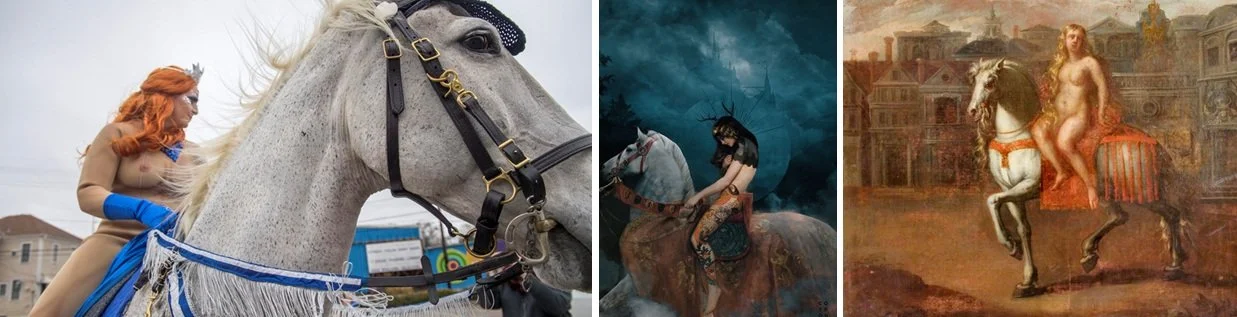
…Godiva. But alas, William did not marry Lady Godiva.
Theodoric was Walter’s brother, and some of Theodoric’s land went to Walter. It also appears that the father of Walter the Deacon and Theodoric II was, in fact, named Theodoric, who also had lands in Suffolk county, in particular…Bacton, giving him the name Theodoric de Bacton. It seems safe to maintain that he was dead by 1086. Theoderic married Muriel De Munchensy, born…Valoienes. Prior to Theodoric, Muriel had been married to Hubert de Munchensy. She died in 1160, at 72 years of age. She appears to have been born in Normandy.
Walter the Deacon and his family founded the nunnery at Wix, where approximately 10 nuns lived. The remains of the priory church…
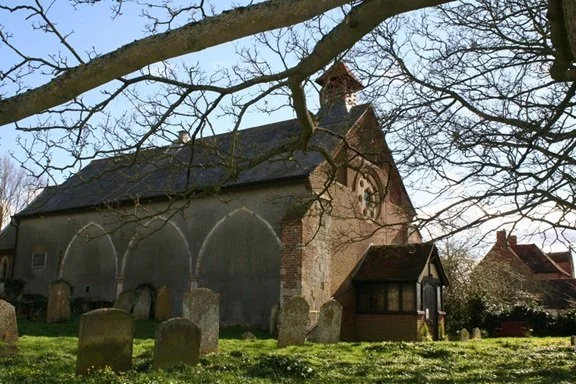
The connection between the church and Walter’s family is based on a skeleton found on church grounds, and determined to be that of Alexander. A farmer was ploughing land in 1961, when he hit a stone coffin. The coffin was dated to 1140, which forms the basis of the supposition that the skeleton in the coffin was Alexander.
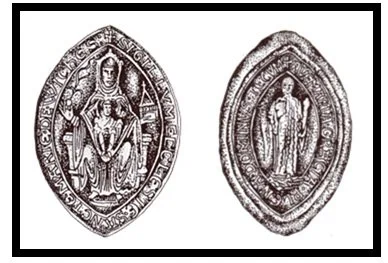
These are the seals of the convent of Wix priory (left), and the seal used by Prioresses Idonea, Constance, and Christina (right). Alexander’s grant was later confirmed by William Fitz Robert, when he referred to Walter Mascherel and Alexander as his uncles. His sister, Edith (Egidia) married Maurice de Windresor, son of Walter Fitz Other. They gifted land to a nunnery at Sirichesie and Purleigh. She and her husband established a convent of monks to pray for the soul of Ralph de Hastings the dapifer. This Ralph appears to have used the named…de Hastings. These monks were to be associated with the Church of St. Edmund, confirmed by a charter dated May 12,1130. It was completed in 1226. The chapel was originally associated with the church of St. Peter.
Edith, daughter of Walter the Deacon, was originally married to the Dapifer of Bury…Ralph de Hastings. Ralph died with no issue, and Edith then married Maurice de Windsor. The stewardship of Bury went to William, who described Ralf de Hastings as his paternal uncle, whose maternal uncle was Maurice de Windsor, his maternal uncle, son of Walter Fitz Other, further connecting the title…de Windsor…with the family of Walter the Deacon. The founding of the nunnery was witnessed by William de Hastings, son of Robert Fitz Walter, and grandson of Walter the Deacon. And it is quite fascinating that William de Hastings is described, in relation to Walter Mascherel and Alexander, as their…lord, suggesting that Walter’s position was passed down to Robert, who passed it down to William de Hastings. The nuns at Wix have been accused of being involved in forgeries of their deeds…
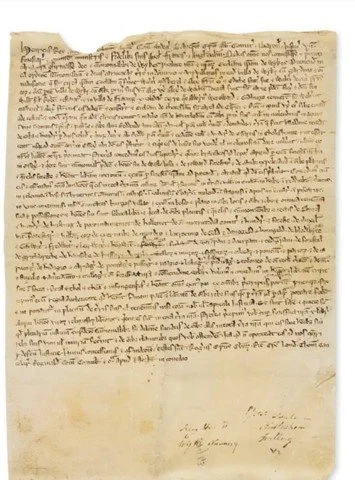
It is possible that the nuns had these “forgeries” made simply to replace currently existing grants that were damaged. Wix (Essex) is only 116 miles from Hastings (East Sussex). And the name…Estaines… could be telling.
Commodo cursus magna, vel scelerisque nisl consectetur et. Donec id elit non mi porta gravida at eget metus.