

Henry was born in 1235 and died in 1268 at Ashill, Norfolk. He held the castles of Allesley and Fillongley in Warwickshire. He was also Constable of Winchester Castle. Allesley remains a romantic village…
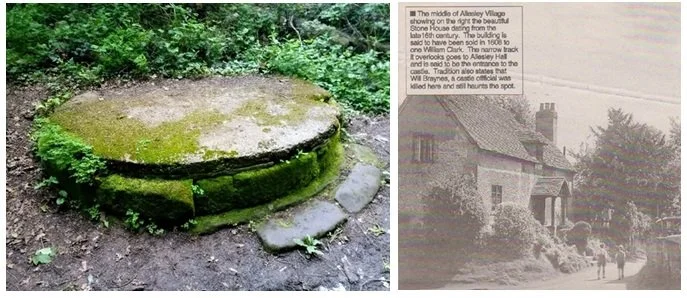
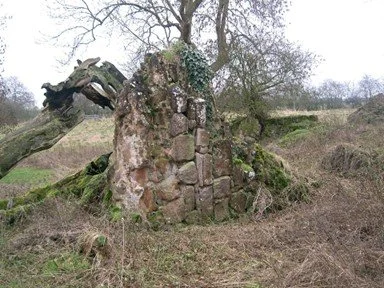
…but only the motte of Allesley castle survives. Fillongley castle is, essentially, in the same condition…
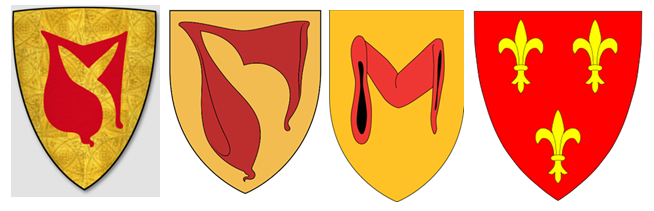
He was the only son of Henry Hastings (E-002) and Ada Hastings. Ada was the daughter of David, claimant to the throne of Scotland. His arms…
Since he was a minor at the time of his father’s death, Henry became the ward of Geoffrey de Lusignan and Guy de Lusignan, half-brothers of Henry III, sons of Isabella, formerly wife of King John, who married Hugh X of Lusignan. Arms of the Lusignans…
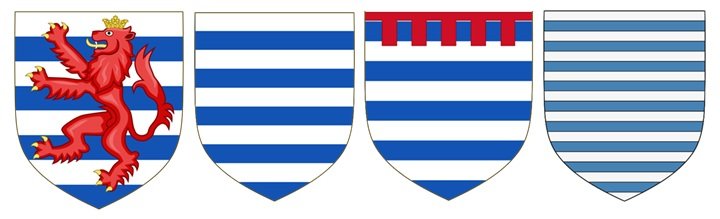
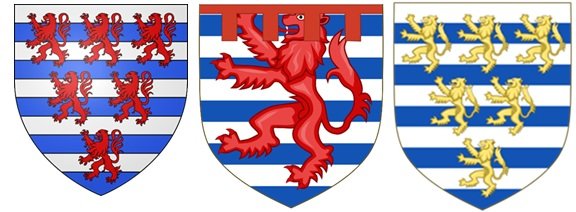
…then, William III de Cantilupe…for arms, see first panel. Images are credited to Wikipedia.
Henry was the father of John Hastings (1rst baron) and Edmund Hastings, who also bore the title 1rst Baron Hastings. He had 3 sisters…Auda; Lora; and Joan, Prioress of Grace Dieu. Upon his death in 1268, his son John was an heir of the king’s brother and nephew…Richard and Edmund of Cornwall.
Henry is most notable for his participation in…
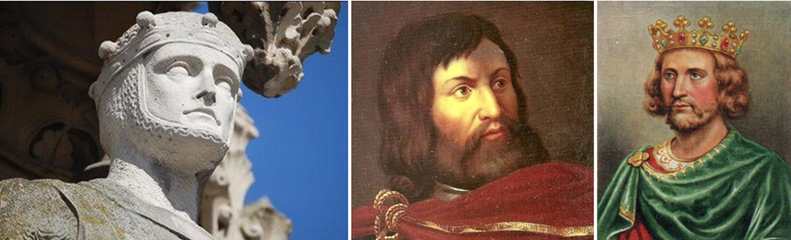
…Simon de Montfort’s (left and center) rebellion against King Henry III (right). Although Henry accompanied King Henry III to Scotland in 1255, Henry Hastings joined the uprising of Simon de Montfort, 6th Earl of Leicester. Simon gave Henry Hastings a baronial title, which was dismissed after the rebellion was put down. He joined the side of the rebels in the Barons’ War of 1263, his reward being excommunication by Archbishop of Canterbury…Boniface. On December 13, 1263, Henry bound himself to the decision of the French King Louis IX (later Saint Louis). In January 1264, Henry III asked French king Louis IX (later Saint Louis) to mediate the conflict between the crown and the rebel barons. Inevitably, Louis took the side of the English king.
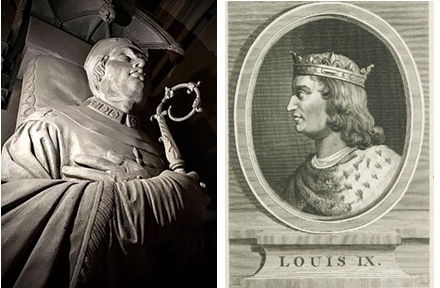
Images…Boniface and French king Louis IX. Henry was then present at the siege of Rochester. Also, Henry led troops, mainly Londoners, at the Battle of…
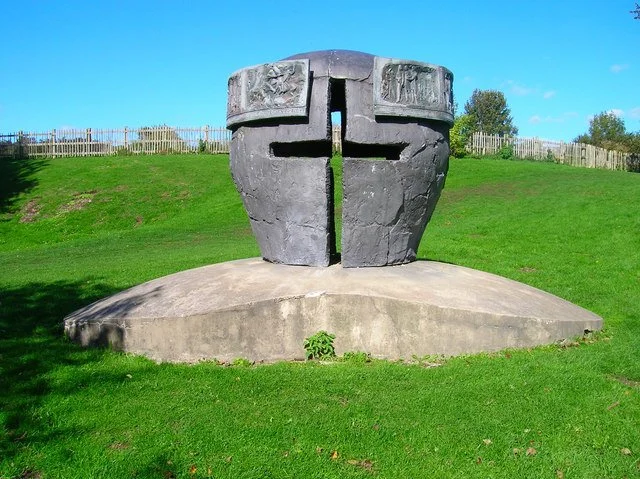
…Lewes in 1264, and was knighted by Simon. It was at this battle that King Henry III and his son, Prince Edward, later King Edward I, were captured, and Simon briefly ruled England. Thus, Henry was appointed constable of the castles located in Scarborough and Winchester. On December 14, he was summoned to parliament, and was scheduled to participate in the Dunstable Tournament in March 1265. However, war broke out again, and sided with Simon at the battle of Evesham (August 4, 1265), being taken prisoner. He was later released, and joined the Earl of Derby at the battle of Chesterfield. He proceeded to destroy the countryside at Kenilworth. Captured again, he was fined. After being released, he broke his oath again, and led rebels at the Isle of Ely. This lead to his surrender to king Edward in July 1267. One source commented on Henry’s violence and viciousness, calling him…Malefactorum Maleficus Gubernator…An Evil Ruler of Evil Men.
Simon died in this battle, and his body was…
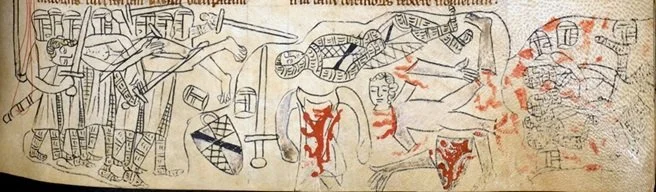
…chopped into pieces. Some people sure can hold a grudge. Henry Hastings was wounded in the battle, and taken prisoner by Thomas de Clare. In January and February of 1265-1266, the king granted Henry’s wife a yearly 100 pounds from Henry’s estates. Henry was released after February 1266, and promptly joined Simon de Monfort’s supporter…
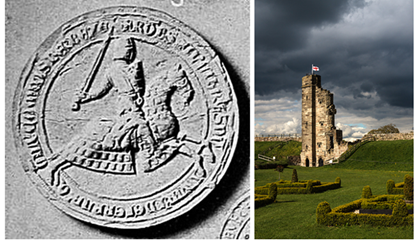
…Robert de Ferrers III (6th Earl of Derby), who was born in Tutbury castle, where Mary, Queen of Scots would be imprisoned. Henry managed to escape from being captured at Chesterfield, Derbyshire. He ,joined another supporter of Simon, John de la Warr, brother to Roger de La Warr, and defended Kenilworth castle during the period June 27, 1266 – December 13, 1266. He led the last rebels on the Isle of Ely, but upon the failure of the uprising, Henry pledged fealty to the king in July 1267. Following the suppression of the revolt, Henry Hastings was made a baron, and served as Constable of Winchester Castle, and hereditary Steward of the Abbey of Bury of Saint Edmunds.
Henry owned extensive lands, including those in Suffolk; Leicestershire; Middlesex; Northamptonshire; Shropshire; and Warwickshire. Henry, Ada, John Hastings (1rst baron), and the latter’s wife…Isabel de Valence were buried in the Hastings Chapel in the Greyfriars Monastery, Coventry, Warwickshire. This may have been the chapel of St. Nicholas. The Hastings effigies were once found there, though they are now lost. The church was destroyed by the Great Fire of London in 1666, and then rebuilt. The German attack on December 29, 1940, caused extensive damage. Unfortunately, the monastery was destroyed during WWII. There was also a window with the Hastings coat of arms, and a second with the arms of the Hastings and De la Spencer families. Isabel de Valence is buried there, as is Joanna Huntingdon, daughter of John Hastings. Henry’s son John Hastings (1rst baron), along with his wife Isabella were also buried there. Also buried there was Robert de Shotesbroke, who was the standard-bearer and steward of Henry Hastings. Henry is referred to as Dominus (Lord).
Commodo cursus magna, vel scelerisque nisl consectetur et. Donec id elit non mi porta gravida at eget metus.